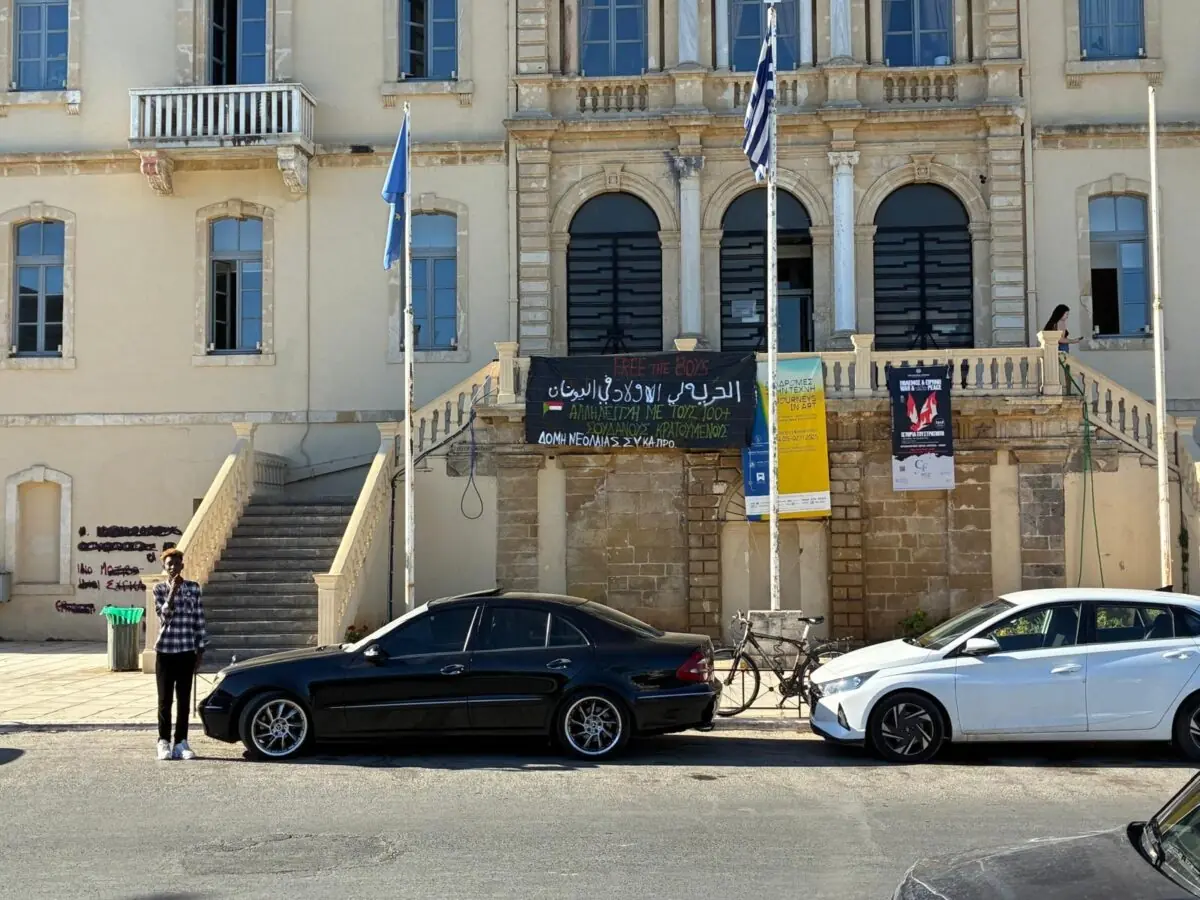
On September 1, 2025, dozens of young men from Sudan, Bangladesh, and Egypt were supposed to stand trial in Chania, Crete. But none of the announced hearings actually took place: most cases were postponed, and some of the defendants signed confessions under highly problematic circumstances in exchange for reduced sentences (“plea deals”).
Criminalization of Migration
All defendants had previously been criminalized and imprisoned because they allegedly steered the boat or took on another role during their journey from Libya to Crete. This approach is part of the systematic persecution of migrants, observed across Europe’s external borders.
For most, between arrest and trial there were five to seven months of pre-trial detention — months they spent innocently in overcrowded prisons. The renewed delays mean the accused will remain in custody for further months — far from their families, some of whom had traveled to Crete to testify, yet were not even allowed to greet their relatives in the courtroom. For many, this represents yet another disruption of family life.
Structural Rights Violations in Criminal Trials
Numerous activists and journalists were present in the courtroom to support the defendants. Although the public was formally admitted, it was impossible to follow the proceedings, as no microphones were used. The postponement will make it even harder for supporters to accompany the now scattered hearings.
Especially scandalous was the absence of qualified interpreters. In some cases, proceedings were directly postponed; in others, an Arabic-speaking prisoner, in handcuffs, had to step in as an interpreter — a clear violation of international standards, especially of “fair trial” standards. Without independent interpretation, the accused often remain unaware of what they are actually charged with, what is being discussed in court, or what the consequences of signing a confession might be.
Serious violations of rights were also evident in the defense. Most state-appointed lawyers spoke to the accused for the first time only shortly before or even during the trial itself. They had little to no knowledge of the files or the individual circumstances. Time and again, we observed how defendants were deliberately pressured into signing plea deals — often without sufficient explanation, without translation, and without time to reflect.
Confessions Under Pressure: Impact on Asylum and Residence
Plea deals are agreements in which the defendant agrees to plead guilty in exchange for a reduced sentence. They, may appear to be a better choice for the defendants or a quick fix for overburdened courts, but they have disastrous consequences for those affected. Anyone who pleads guilty under pressure not only accepts a sentence that they should not face, but also blocks future prospects: the confession can lead to the rejection of asylum applications, make residence permits unattainable, or close off the possibility of working in certain sectors.
The day in Chania once again highlights how migrants in Europe are systematically criminalized and stripped of their rights. Every day behind bars is lost time, every postponement an additional violation. What becomes visible here is not an exception, but an expression of a system that deprives refugees of their rights, stigmatizes them as “smugglers,” and thereby destroys both their freedom and their future. Our solidarity goes to those affected and their families — and we will stand by their side until these prisons are history.